
Starting the School Year Well: In-Services, IPPs, and What Actually Helps
October is when the emails start
The first weeks of a school year can be a whirlwind, and it can take time to tell whether a change in your child is just start-of-school jitters or something else. By October, routines have set in, the work has gotten harder, and whatever was going to become a problem usually has.
This is also the time of year parents hear from the school. Your child is disrupting the class. Your child won’t start their work. Your child keeps asking the same question, or the principal has flagged some behaviour.
While most teachers have plenty of goodwill, they often lack information about Tourette Syndrome and OCD. Without information, a compulsion looks like defiance; a tic looks like showing off. The child working hardest in the room looks like the one who is not trying at all.
Schools can use two tools in these situations: an educational in-service and an individual program plan (called an individual education plan, or IEP, in most provinces outside Alberta). Some assume these are competing alternatives. They are not. One changes what a room understands; the other changes what a student receives.
According to Julian Fletcher, Program Coordinator at the Tourette OCD Alberta Network, a strategic partner of Tourette Canada, September and October are the most effective months for an in-service. They set the tone for the year and land when children with Tourette Syndrome are most anxious about what the year will bring.
A webinar worth your time this month
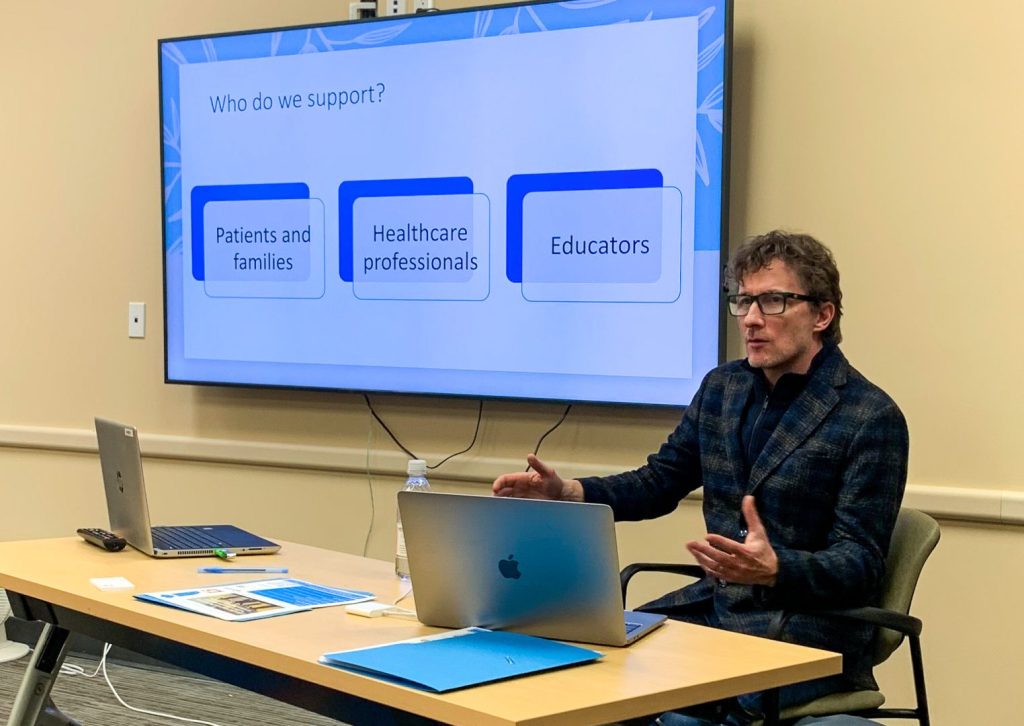
Julian spends much of his week at the pediatric Tourette’s clinic in Calgary, meeting parents in the days after a diagnosis, and he delivers an in-school presentation roughly once a week across the academic year.
In a recent webinar, he walked through two things schools can offer families: the educational in-service and the individual program plan.
If you are heading into a meeting with your child’s school this term, or looking to set one up, this 35-minute video will save you hours and help bring understanding to situations where frustration and confusion would otherwise fester.
One note on terminology before we go further. Julian works in Alberta, where the individualized program plan (IPP) and the Alberta Education requirements around it are specific to that province. The document goes by different names elsewhere. Ontario, British Columbia, Manitoba, Saskatchewan, New Brunswick and the territories use an individual education plan (IEP). Nova Scotia also uses IPP, while Newfoundland and Labrador uses an individual support services plan (ISSP), and French-language schools in Quebec use a plan d’intervention. If you are unsure, your school’s resource teacher or special education coordinator will know the right term to ask for.
If you need help navigating your province, contact us.
KEY INSIGHTS
Start with the student, not the diagnosis
In the webinar, Julian describes a child who had to walk in and out of his classroom doorway six times before he could enter. Only on the sixth pass did it feel right. His teacher did not know he had OCD, so what the room saw was a boy being deliberately difficult, every day, in front of everyone.
Teachers contacting Julian generally want one thing: a way to stop the tic. He describes the tone as polite but desperate.
He does not answer that question. He replaces it with a more important one: is the tic creating a barrier to learning, participation or wellbeing, and what can we change?
He explains that a tic is not misbehaviour and cannot be corrected out of a child. But a seat can move, a test can happen in a quieter space, a child can have a way to signal that they need to step out.
His mantra is worth repeating to any teacher who will listen: we ignore the tics; we do not ignore the child.
Two different tools, often needed together
If you’re unfamiliar with an educational in-service or individual program plan, here are the basics; Julian’s video will fill in more detail.
An educational in-service is a presentation delivered at the school to teachers and staff, to a class of students, or both. These presentations explain what tics are, what OCD looks like in a classroom, and what helps create a cohesive learning environment. It focuses on the room, not one child, and is usually free.
An individual program plan is a written document for one student. It records that child’s assessed needs and the specific accommodations and goals the school will put in place, and it is reviewed as those needs change.
| Educational in-service | Individual program plan | |
| Focus | The classroom and the school | One student |
| Purpose | Builds knowledge and understanding | Documents accommodations and goals |
| Reaches | Teachers, staff, classmates | The staff working with that child |
| Content | What Tourette Syndrome and OCD are, and general strategies | That child’s specific needs and supports |
| Over time | Prevents well-meaning mistakes | A working document, reviewed and revised |
A school may well want both: the in-service so staff understand what they are seeing, the plan so the right supports are written down and monitored.
You do not have to be in Alberta to arrange one. Tourette Canada delivers in-service presentations across the country, customized to the audience: staff sessions and classroom presentations for students, as well as sessions for workplaces, camps, sports teams, community groups and police services. You can request one here, or email services@tourette.ca.
Finding the path: what to do when
The order matters more than the paperwork. Broadly, it runs like this.
- Name the barrier, not the diagnosis: The question is not whether your child has Tourette Syndrome. It is what is getting in the way of learning, participation or wellbeing right now.
- Ask about an in-service: Parents, teachers or a principal can request one. It does not require a diagnosis, a referral, or a plan already being in place.
- Identify needs formally: This can come from a psychological assessment, your child’s doctor or neurologist, or observations from classroom and resource teachers, who often see the most.
- Pick a small number of goals: Julian is clear on this: trying to address every barrier at once overwhelms the student and the plan fails. Choose what matters most this year.
- Build the plan together. Schools are required to obtain informed written consent from parents, so a document handed to you to sign is not a plan you helped build. Your child’s own input is the piece most often skipped, and children can usually name the barrier faster than the adults can.
- Review and revise. It is a working document, not a form. It should change as your child does, and it follows them to the next grade, the next teacher and the next school.
A few accommodations that come up often
While every situation is different, and context and compassion are critical, the webinar offers ideas on what accommodations look like by discussing some of the most common.
- Vocal tics: a quieter workspace, or permission to step out and return
- Motor tics: movement breaks, flexible seating
- Writing affected by tics: a device, a scribe, or another way to show the work
- OCD slowing task completion: clear expectations and agreed supports rather than open-ended time
- Test anxiety: a separate room and planned breaks, arranged before the day
- Hard transitions: advance warning, predictable routines, one consistent contact person
More questions and concerns
Julian’s webinar goes further than we have here, including what he covers with staff and the empathy exercise he runs with teachers, so that video is your first stop.
If afterwards you are not sure what to ask your child’s school for, or what you are entitled to where you live, reach out. That is what we are here for.

Written By: Corey King
Corey King is an award-winning storyteller, designer and producer. He has written for the Winnipeg Free Press and Canadian non-profits including Tourette Canada, BizforClimate and the Interlake Tourism Association. He is also Studio Head at ZenFri Inc.